
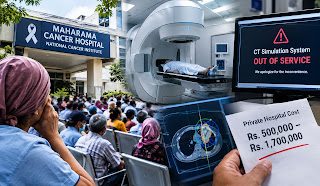
මේ හේතුවෙන් රෝගීන් 1,000කට අධික පිරිසක් මේ වන විටත් ප්රතිකාර ලබාගැනීමේ පොරොත්තු ලැයිස්තුවට එක්ව ඇති බව පෙන්වා දෙන වෛද්ය හා සිවිල් අයිතිවාසිකම් පිළිබඳ වෛද්යවරුන්ගේ වෘත්තීය සමිති සන්ධානයේ සභාපති, විශේෂඥ වෛද්ය චමල් සංජීව මහතා, මෙම අර්බුදය කෙරෙහි රජයේ කඩිනම් අවධානය යොමුවිය යුතු බව අවධාරණය කරයි.
‘සීටී සිමියුලේෂන්’ යනු විකිරණ චිකිත්සාව ආරම්භ කිරීමට ප්රථම, සීටී ස්කෑන් (CT Scan) යන්ත්රයක් භාවිත කරමින් විකිරණ ලබාදිය යුතු නිශ්චිත ප්රදේශය සිතියම්ගත කරනු ලබන විශේෂිත සැලසුම් ක්රියාවලියකි.
රේඛීය ත්වරණ (Linear Accelerator) යන්ත්ර මගින් ප්රතිකාර ලබන රෝගීන් සඳහා මෙම ක්රියාවලිය අත්යවශ්ය වන්නේ, ඒ හරහා පිළිකා සෛල පවතින නිශ්චිත ක්ෂේත්රය වෙත පමණක් විකිරණ එල්ල කිරීමටත්, අවට ඇති නිරෝගී පටකවලට සිදුවන හානිය අවම කර ගැනීමටත් විශේෂඥ වෛද්යවරුන්ට හැකියාව ලැබෙන බැවිනි.
කෙසේ වෙතත්, පසුගිය අප්රේල් 28 වන දින සිට මෙම සේවාව ඇණහිට ඇති බව වාර්තා වන අතර, ඒ හේතුවෙන් ප්රතිකාර සැලසුම් කිරීම සඳහා පෙට් ස්කෑන් (PET Scan) පරීක්ෂණ මත යැපීමට බලධාරීන්ට සිදුව තිබේ.
එහෙත් මෙය ‘සීටී සිමියුලේෂන්’ ක්රමවේදය සඳහා භාවිත කළ හැකි ප්රශස්ත හෝ නිර්දේශිත විකල්පය නොවන බවත්, එමගින් රෝගීන්ට නියමිත වේලාවට විකිරණ චිකිත්සාව ලබාදීමේ ක්රියාවලිය තවදුරටත් සංකීර්ණ විය හැකි බවත් වෛද්ය ආරංචි මාර්ග පෙන්වා දෙයි.
මේ හේතුවෙන් රෝගීන් 1,000කට වැඩි පිරිසක් අවශ්ය ප්රතිකාර සැලසුම් සකස් කරගැනීමට නොහැකිව දිගු පොරොත්තු ලැයිස්තුවක රැඳී සිටින අතර, එම ප්රමාදය රෝගීන්ගේ ජීවිතවලට දැඩි තර්ජනයක් එල්ල කළ හැකි මට්ටමේ බරපතළ අවදානමක් නිර්මාණය කර ඇති බවටද දැඩි කනස්සල්ලක් මතුව ඇත.
මෙම ක්රියාවලිය පෞද්ගලික අංශයේ රෝහල් මගින් සිදු කරගැනීමට උත්සාහ කරන රෝගීන්ට, අවශ්ය සේවාවන්හි ස්වභාවය අනුව රුපියල් 500,000 සිට මිලියන 1.7 (රුපියල් දාහත් ලක්ෂය) දක්වා වූ අධික පිරිවැයක් දැරීමට සිදුවන අතර, එය සාමාන්ය පවුල් බොහොමයකට දැරිය නොහැකි මට්ටමේ මුදලකි.
මීට අමතරව, Linear Accelerator යන්ත්රවල පවතින තාක්ෂණික දෝෂ හේතුවෙන්ද විකිරණ ප්රතිකාර ලබාගැනීමේ පොරොත්තු ලැයිස්තුව සැලකිය යුතු ලෙස ඉහළ ගොස් තිබේ.
රෝහලේ දැනට ස්ථාපිත කර ඇති එවැනි යන්ත්ර 5 අතුරින් යන්ත්ර 2ක්ම මේ වන විට අක්රිය තත්ත්වයේ පවතින බව වාර්තා වන අතර, එමගින් රෝගීන්ට කඩිනමින් සහ නියමිත කාලෝචිත පරිදි ජීවිතාරක්ෂක ප්රතිකාර සැපයීමට ඇති හැකියාව දැඩි ලෙස සීමා වී ඇත. ct simulation scan price in sri lanka
CT Simulation Breakdown at Maharagama Cancer Hospital Leaves Over 1,000 Patients Waiting for Radiation Treatment
Private-sector costs reportedly reach up to Rs. 1.7 million as patients face delays in critical radiation therapy planning
More than 1,000 cancer patients are reportedly facing prolonged delays in receiving radiation therapy following the disruption of the CT Simulation service at Sri Lanka’s main cancer treatment hospital in Maharagama.
The CT Simulation service, which is considered an essential component in planning radiation therapy, has reportedly not been functioning properly since April 28. The disruption has raised serious concerns over the growing waiting list for patients awaiting potentially life-saving treatment.
Dr. Chamal Sanjeewa, Chairman of the trade union alliance representing doctors concerned with medical and civil rights, has called for urgent government intervention to address the situation.
CT Simulation is a specialised planning procedure carried out using a CT scanner before radiation therapy begins. It allows specialists to precisely map the area that needs to receive radiation and develop an appropriate treatment plan.
The procedure is particularly important for patients treated using Linear Accelerator machines, as accurate treatment planning enables radiation to be directed more precisely at the cancerous area while reducing exposure and potential damage to surrounding healthy tissue.
However, reports indicate that the CT Simulation service has been disrupted since April 28. As a result, authorities have reportedly been forced to rely on PET scans in some cases for treatment planning.
Medical sources have pointed out that PET scans are not considered an optimal or routinely recommended substitute for dedicated CT Simulation in radiation treatment planning. The situation could therefore further complicate efforts to provide radiation therapy within the appropriate timeframe.
According to the concerns raised by medical professionals, more than 1,000 patients are currently waiting for the necessary treatment planning, creating a significant backlog. There are growing fears that prolonged delays in accessing radiation therapy could have serious consequences for patients whose treatment is time-sensitive.
The financial burden is also becoming a major concern.
Patients who attempt to obtain the required services through private hospitals may reportedly have to spend between Rs. 500,000 and Rs. 1.7 million, depending on the procedures and services required. Such costs are beyond the financial reach of many ordinary families.
The crisis is reportedly being compounded by technical problems affecting Linear Accelerator machines used for radiation treatment.
Of the five Linear Accelerator machines currently installed at the hospital, two are reportedly out of service, further limiting the hospital’s ability to provide radiation therapy to patients without significant delays.
The combination of the CT Simulation service disruption and the malfunctioning Linear Accelerator machines has therefore raised serious concerns about the hospital’s capacity to provide timely radiation treatment to the growing number of cancer patients awaiting care.
Medical professionals and civil rights advocates are urging authorities to take immediate steps to restore the required equipment and services and prevent further deterioration of the situation.