By Sanath Nanayakkare
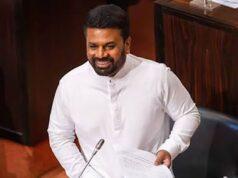
Delivering his administration’s third national budget – Sri Lanka’s 81st – in Parliament yesterday, President Anura Kumara Dissanayake, in his capacity as Minister of Finance, unveiled a Rs. 4,992.77 billion spending blueprint designed to pivot the economy from post-crisis stabilisation to structural transformation.
Addressing mounting public expectations for cost-of-living relief, the 2027 Budget introduces substantial Pay-As-You-Earn (PAYE) personal income tax concessions, widens tax brackets for middle- and high-income earners, and rolls out targeted subsidies to ease household energy expenses. Simultaneously, the government has earmarked a record Rs. 2,000 billion (Rs. 2 trillion) for public capital expenditure while holding the borrowing ceiling steady at Rs. 3.8 trillion despite a 12.6 percent rise in overall outlay.
“The sacrifices made by the people will not last forever. It is the government’s responsibility to translate economic stability into tangible benefits by creating new jobs, increasing national revenue, improving the quality of public services, and delivering better opportunities for all,” President Dissanayake told the House, noting that Cabinet had granted approval for the proposals earlier this morning.
Personal Tax Relief and Household Savings
In a direct move to ease the tax burden on salaried professionals and middle-income households, the President announced an upward revision of the PAYE tax-free threshold:
Higher Tax-Free Allowance: The monthly personal income tax-free threshold increases from Rs. 150,000 to Rs. 162,500, raising the annual tax-free ceiling from Rs. 1.8 million to Rs. 1.95 million.
Widened Tax Brackets: Progressive tax slabs have been restructured to include a new 12 percent tier replacing the previous 18 percent rate at that level, establishing rates across 6%, 12%, 18%, 24%, 30%, and 36%. The monthly threshold for the top 36 percent bracket has been raised from Rs. 358,000 to Rs. 433,000, delivering monthly tax savings ranging from Rs. 750 to Rs. 15,750.
Rooftop Solar & Battery Incentives: To lower household electricity costs, the government will abolish the 10 percent Port and Airport Development Levy (PAL) on imported solar batteries – reducing the cost of a 1kW battery by roughly Rs. 4,000. Additionally, a Rs. 3.5 billion relief package will provide new domestic rooftop solar users with a Rs. 25,000 subsidy per 1kW of battery storage installed (up to 10kW, or a maximum benefit of Rs. 250,000).
Fiscal Discipline, Post-IMF Roadmap, and State-Owned Enterprises
With the four-year International Monetary Fund (IMF) Extended Fund Facility (EFF) scheduled to conclude in March 2027, President Dissanayake reaffirmed the government’s commitment to completing the programme while disclosing that a dedicated committee has been appointed to evaluate whether Sri Lanka should pursue a successor IMF arrangement.
Highlighting stronger-than-projected fiscal consolidation, the President noted that findings from the IMF’s Sixth Review indicate Sri Lanka’s public debt could decline to 87 percent of GDP by 2032, outperforming the initial programme target of 95 percent.
On state enterprise reform, the President flagged the staggering Rs. 528 billion cumulative loss incurred by SriLankan Airlines between 2008 and 2026, revealing that Cabinet has appointed a special committee to explore debt-reduction pathways for the national carrier and urging bipartisan parliamentary backing. He also cautioned against complacency in the public sector, stating that “remaining for long periods at the lower levels of the public service should not be viewed as a pathway to securing top positions,” as traditional state structures cannot drive modern economic transformation.
Meanwhile, addressing foreign exchange outflows, the President noted that USD 1.6 billion was spent on vehicle imports in 2025, with Letters of Credit (LCs) already opened exceeding USD 1.5 billion – bringing total two-year vehicle import commitments to nearly USD 3 billion.
Record Rs. 2 Trillion Capital Push and Energy Security
Deputy Minister of Finance and Planning Dr. Anil Jayantha Fernando framed the shift toward production-led growth as the central objective of the 2027 proposals, backed by heavy infrastructure and energy allocations.
Further energy and aviation initiatives include constructing a dedicated domestic flight terminal at Bandaranaike International Airport (BIA) and awarding four investor contracts for oil and gas exploration in the Northwestern Mannar Basin shortly after the February 2, 2027 bid deadline. Rural telecommunications tower expansion will also receive state grants alongside a five-year tax holiday.
Trade Expansion and Institutional Modernisation
To boost exports and attract foreign direct investment (FDI), the budget allocates Rs. 1,990 million to establish a National Single Trade Window and Rs. 100 million for a National Single Investment Window, complemented by streamlined state land allocation procedures and a special investor relief package.
On the trade diplomacy front, the government has appointed a committee to expand the existing Free Trade Agreement (FTA) with India, is exploring a new FTA with China, and plans to enter expanded economic partnership agreements with the United Arab Emirates (UAE) and Oman.
Concluding his policy framework, President Dissanayake pledged sweeping legislative and institutional overhauls—noting that laws over a century old and obsolete institutions will be reformed. Forthcoming legislation includes a new State Assets Management Act, a National Statistics Act, updates to the Gambling Regulatory Authority Act, and a modernised national accounting and auditing framework, with every state investment, tax concession, and welfare programme subjected to strict socio-economic benefit evaluations.